
Austin Parks and Recreation Department, Oakwood Cemetery Chapel, exhibit “To Emancipate”.
The Communities
Kincheonville
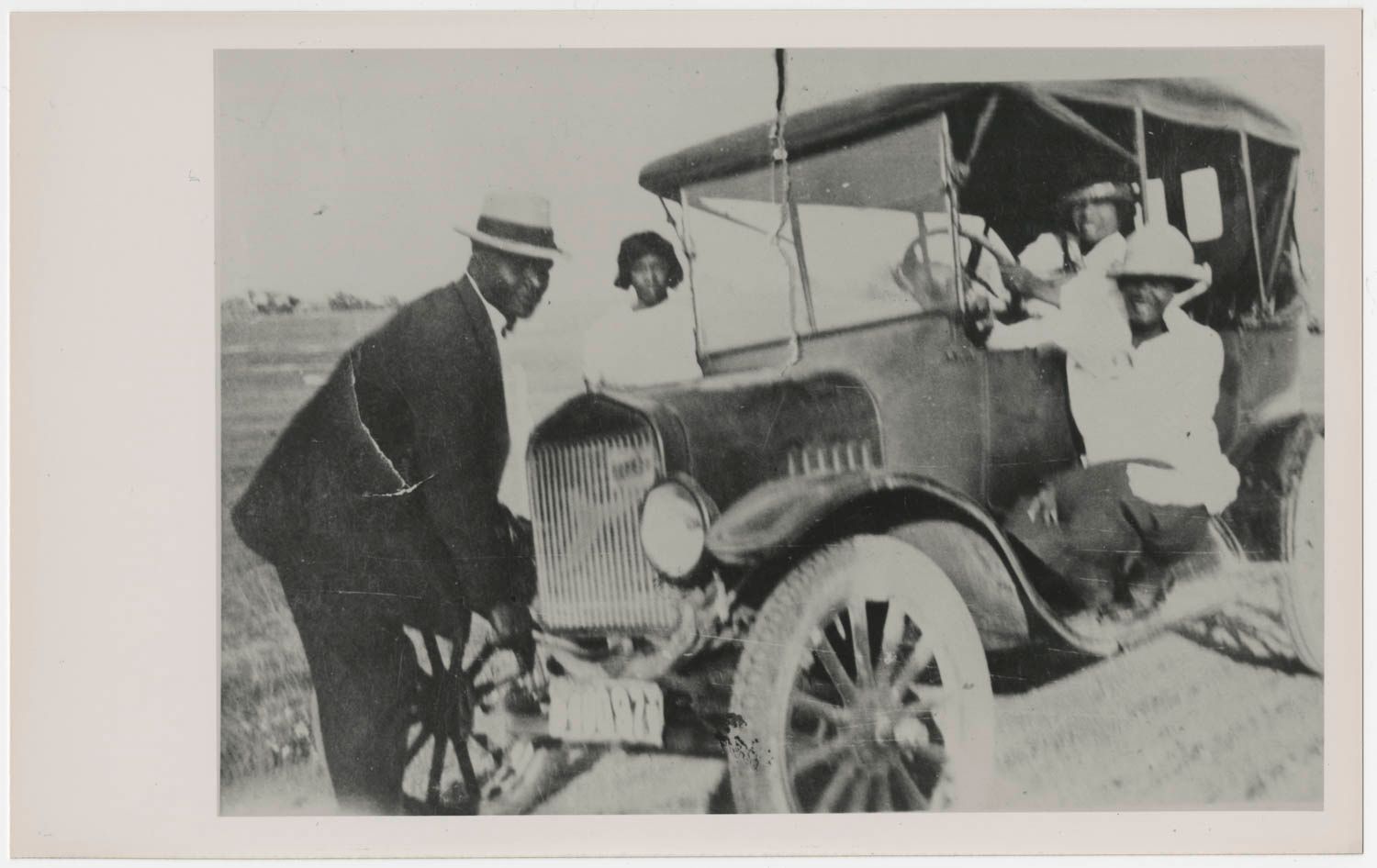
Kincheon Family with their car. Citation: [PICB-13454], Austin History Center, Austin Public Library.
Kincheonville was established in 1865 by formerly enslaved person Thomas Kincheon (or Kinchion). The area existed within the boundaries of the Paisano Trail, Davis Lane, Brodie Lane, and Longview Road. Kincheon developed a successful farm of nearly 300 acres, with several tenants. Kincheonville was a primarily farming community until Kincheon’s son, Thomas Wesley Kincheon II (born in 1870), promoted its development. With the assistance of his own son, Thomas Wesley Kincheon III, they subdivided and platted a southern portion of the family’s land to create Kincheon Subdivision Sections 1 and 2 in the early 1950s. The area includes seven streets named after his children: Minnie, Blumie, James Ander, and Thomas Kincheon.
Dunn’s Memorial Baptist Church, at 3416 Elija Street, is an active Black church in the community. It was organized in 1957 by Reverend Robert M. Dunn through the efforts of the St. John Regular Missionary Baptist Association. Today, the original area has been altered by modern infill development, and most structures are non-historic age homes. The small number of earlier homes in the neighborhood are single-story, minimal traditional-style houses from the mid-twentieth century. One home at 3421 Minnie Street appears to be much older than the other homes in the area. It is a Folk Victorian-style home with a shed-roof front porch; tall, narrow two-over-two-light wood windows; and an original door with leaded glass and a transom. The house does not appear on historic aerials until after 1954, indicating that it may have been moved to this location at that time. The community is bordered on the east by Longview Park and on the north by the Stephenson Nature Preserve and Outdoor Education Center. A small farmstead with a house and outbuildings remains along the east side of Longview Road south of the park.
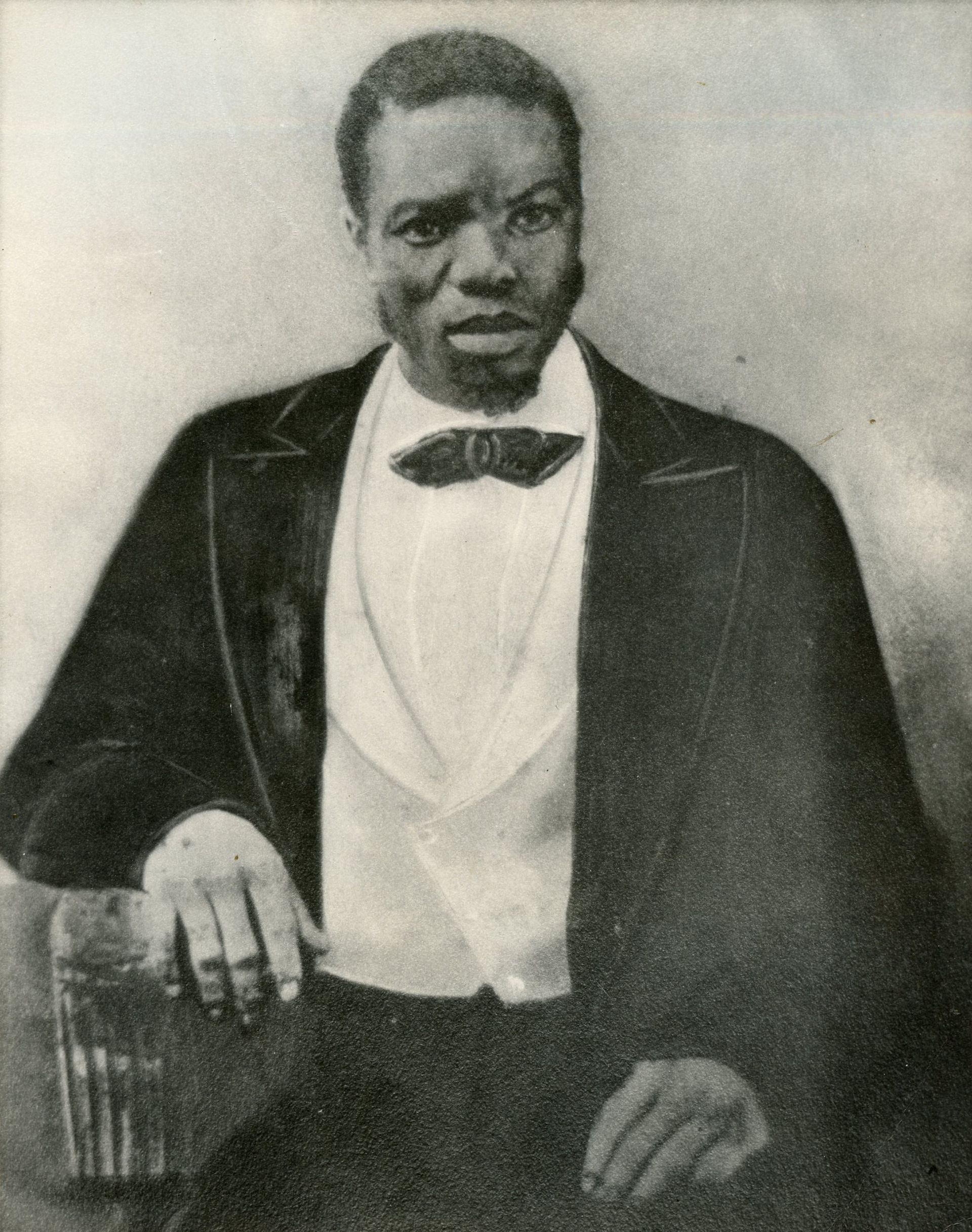
Thomas Kincheon
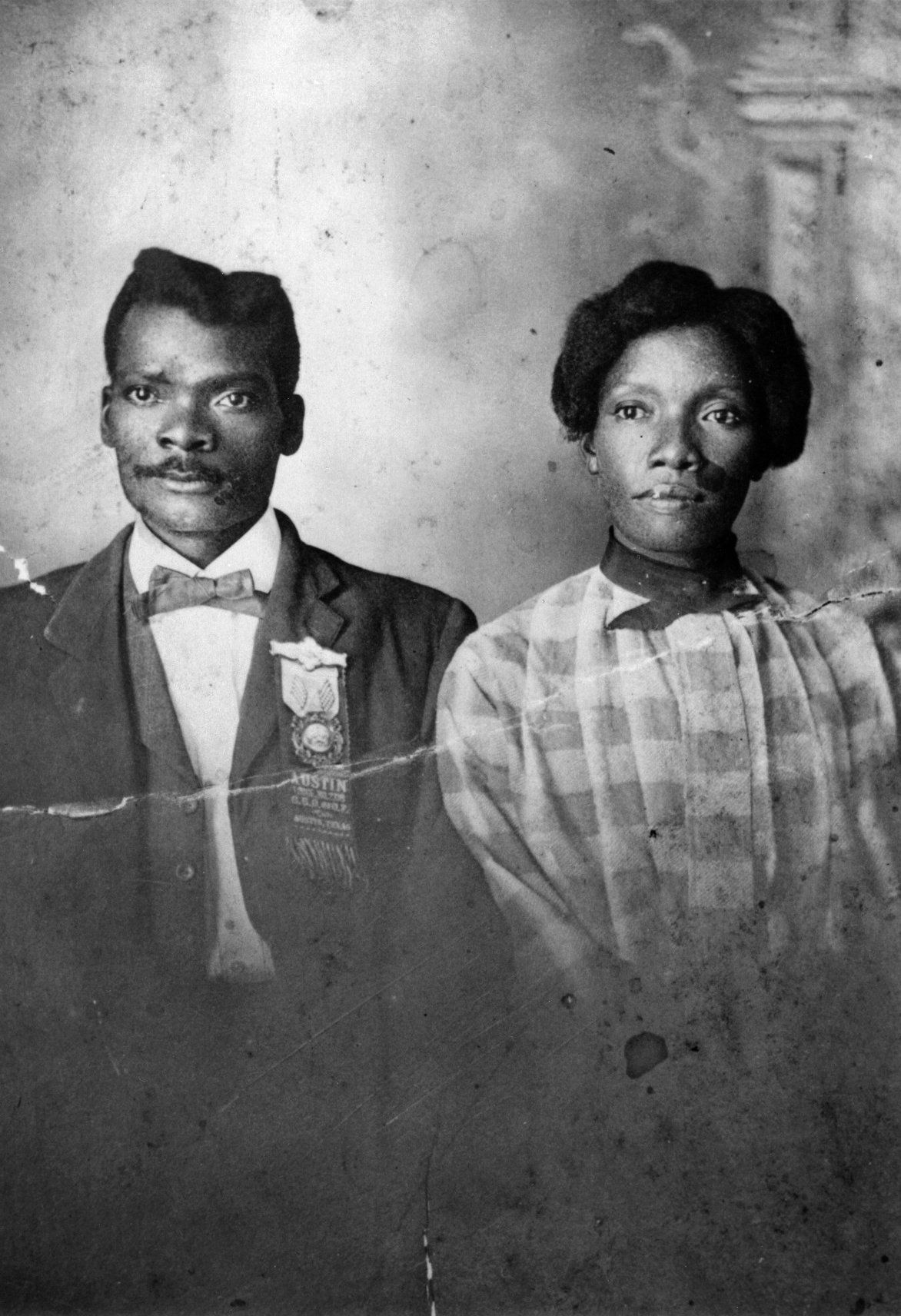
Thomas Kincheon and his wife, Mary
Dunn’s Memorial Baptist Church, at 3416 Elija Street, is an active Black church in the community. It was organized in 1957 by Reverend Robert M. Dunn through the efforts of the St. John Regular Missionary Baptist Association. Today, the original area has been altered by modern infill development, and most structures are non-historic age homes. The small number of earlier homes in the neighborhood are single-story, minimal traditional-style houses from the mid-twentieth century. One home at 3421 Minnie Street appears to be much older than the other homes in the area. It is a Folk Victorian-style home with a shed-roof front porch; tall, narrow two-over-two-light wood windows; and an original door with leaded glass and a transom. The house does not appear on historic aerials until after 1954, indicating that it may have been moved to this location at that time. The community is bordered on the east by Longview Park and on the north by the Stephenson Nature Preserve and Outdoor Education Center. A small farmstead with a house and outbuildings remains along the east side of Longview Road south of the park.
Information provided by the African-American Settlement Survey Travis County, Texas prepared by prepared by Hicks & Company Elizabeth Porterfield, MSHP for Travis County Historical Commission.
This information was supplemented by archivist at the University of North Texas, Michelle Mears, from her book And Grace Will Lead Me Home African American Freedmen Communities of Austin, Texas, 1865-1928.
We recognize that this research is ongoing, drawing extensively from historical documents, archives, and oral histories passed down through generations.
Given the evolving nature of information, it is important to note that details may change. And while inaccuracies may arise, we actively strive to update our records as we acquire new knowledge.
Map provided by Austin Parks and Recreation Department, Oakwood Cemetery Chapel, exhibit “To Emancipate”.
Click on the map to zoom in and explore a specific community.To view a full list of all communities, click the “i” icon in the top-left corner of the map.
